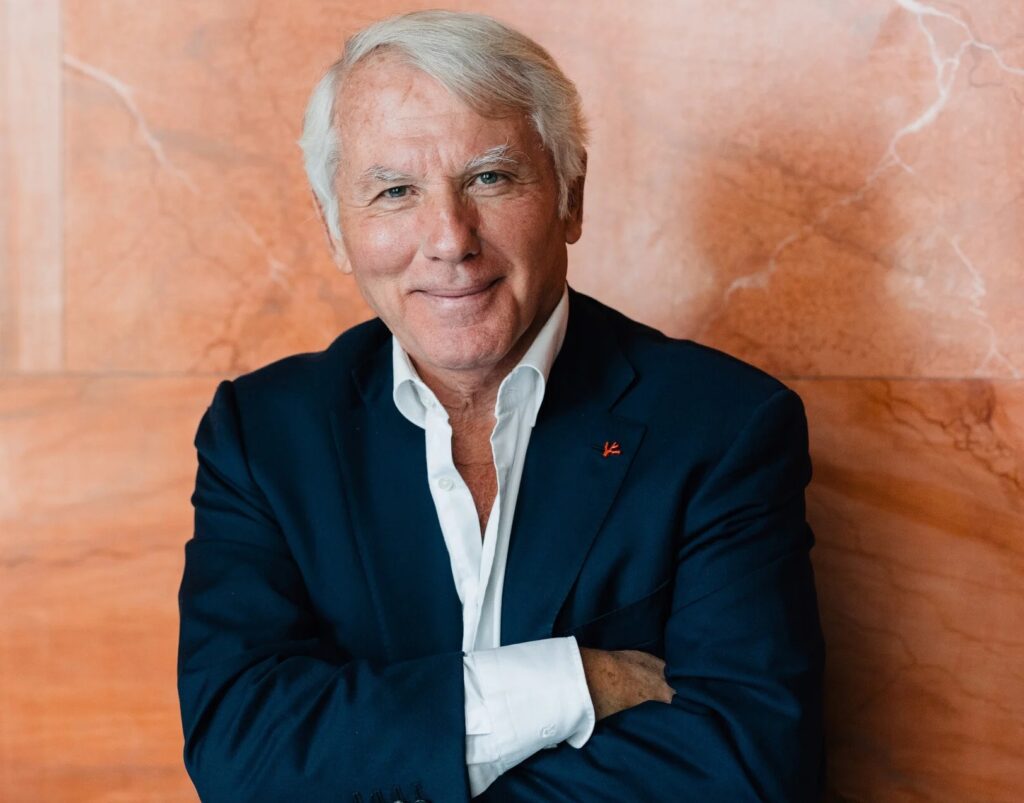
The COSMO-LOGOS Research Center for Science and Culture was established in Greece to honor Professor Dimitri V. Nanopoulos, one of the world’s most influential theoretical physicists and a leading figure in high-energy physics and cosmology.
With a distinguished career at CERN, Harvard University, and Texas A&M University, and as one of the most highly cited physicists globally, Professor Nanopoulos has played a transformative role in advancing fundamental science and inspiring generations of researchers.
Cosmo-Logos center is commited to bring international scientific excellence back to Greece, extending Professor Nanopoulos’ lifelong vision of connecting global research, education, and innovation with Greek society. By linking young Greek scientists and scholars to international networks, research collaborations, and high-level mentorship, the branch serves as a bridge between global scientific leadership and Greece’s emerging scientific community.
Through this initiative, the Center preserves and continues Professor Nanopoulos’ legacy: fostering excellence, expanding opportunities for Greek researchers, and strengthening Greece’s presence within the global scientific and cultural landscape.
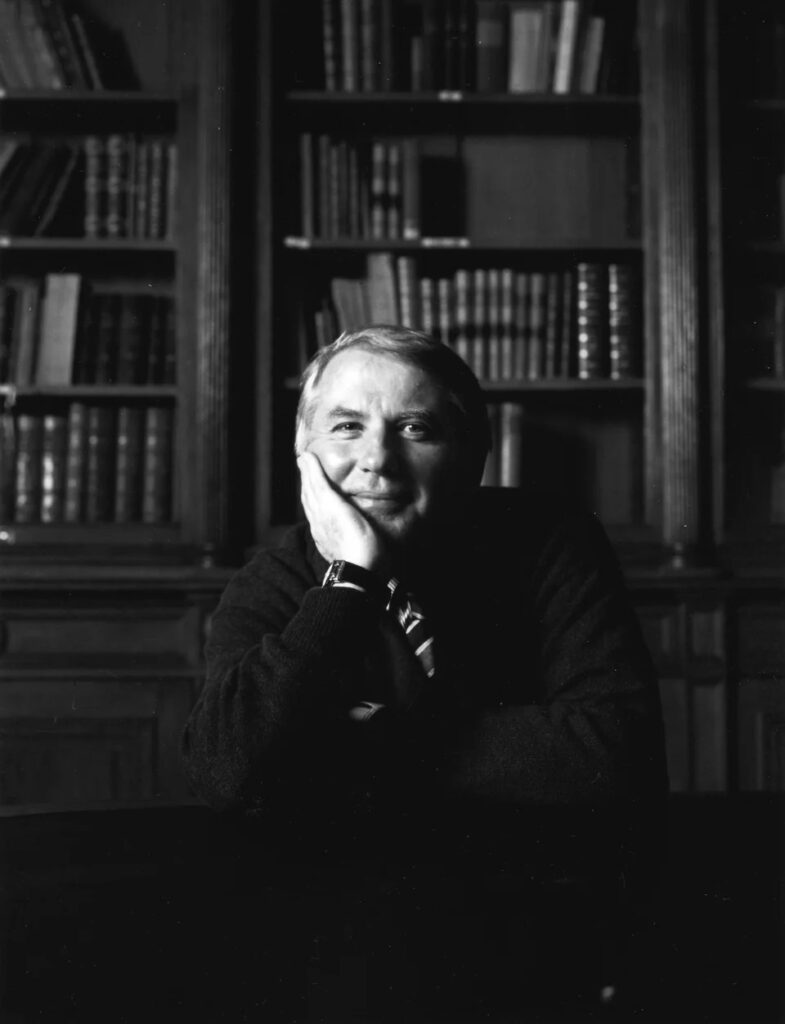
Short Bio:
Dimitri V. Nanopoulos is one of the most influential theoretical physicists and cosmologists of our era, whose pioneering contributions have profoundly shaped modern particle physics, quantum cosmology, and interdisciplinary studies of consciousness. Over more than three decades at CERN, he collaborated with John Ellis and Mary Gaillard to develop the theoretical framework that directly guided the experimental discovery of the Higgs boson, a milestone recognized by Professor Peter Higgs himself.
Nanopoulos’ research spans the infinitesimal and the cosmological, uniting quantum theory, particle physics, cosmology, and pioneering investigations into the “quantum brain.” He has authored over 767 original scientific publications and 15 books, accumulating more than 57,000 citations. According to the 2000 and 2004 Stanford University global citation rankings, he was recognized as the fourth most cited theoretical physicist worldwide. His research has been supported with multi-million-dollar grants from the U.S. Department of Energy, and he has served on high-level advisory panels, including a NASA-appointed committee overseeing $600 million in foundational scientific research.
A visionary at the intersection of science and society, Nanopoulos founded the Nanopoulos Foundation Inc. (New York) and the Nanopoulos Center for Science and Society (Greece), championing interdisciplinary research, science education, and public engagement. In 2011, he was one of only 25 cosmologists worldwide invited to a closed conference at the Vatican Observatory, contributing to global debates on the philosophical and scientific dimensions of cosmology.
His exceptional career is further distinguished by numerous honors: Fellow of the American Physical Society (1988), Member of the Italian Physical Society (1992), Commander of the Order of Honour of the Greek State (1996), and recipient of the Enrico Fermi Award (2009). Through his unparalleled scholarship, leadership, and global influence, Dimitri V. Nanopoulos continues to advance fundamental science while bridging the dialogue between the microcosmos, the macrocosmos, and society at large.